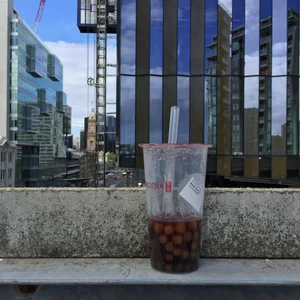
what is being lost?
There has been minimal urban photography in the past 6 months as Suzanne has been unwell and I I have been concentrating on renovating up the cottage in the south-east corner of Adelaide in order to sell it. It has just been sold and this now gives me some time and space to return to, and pick up, this urban photographic project.
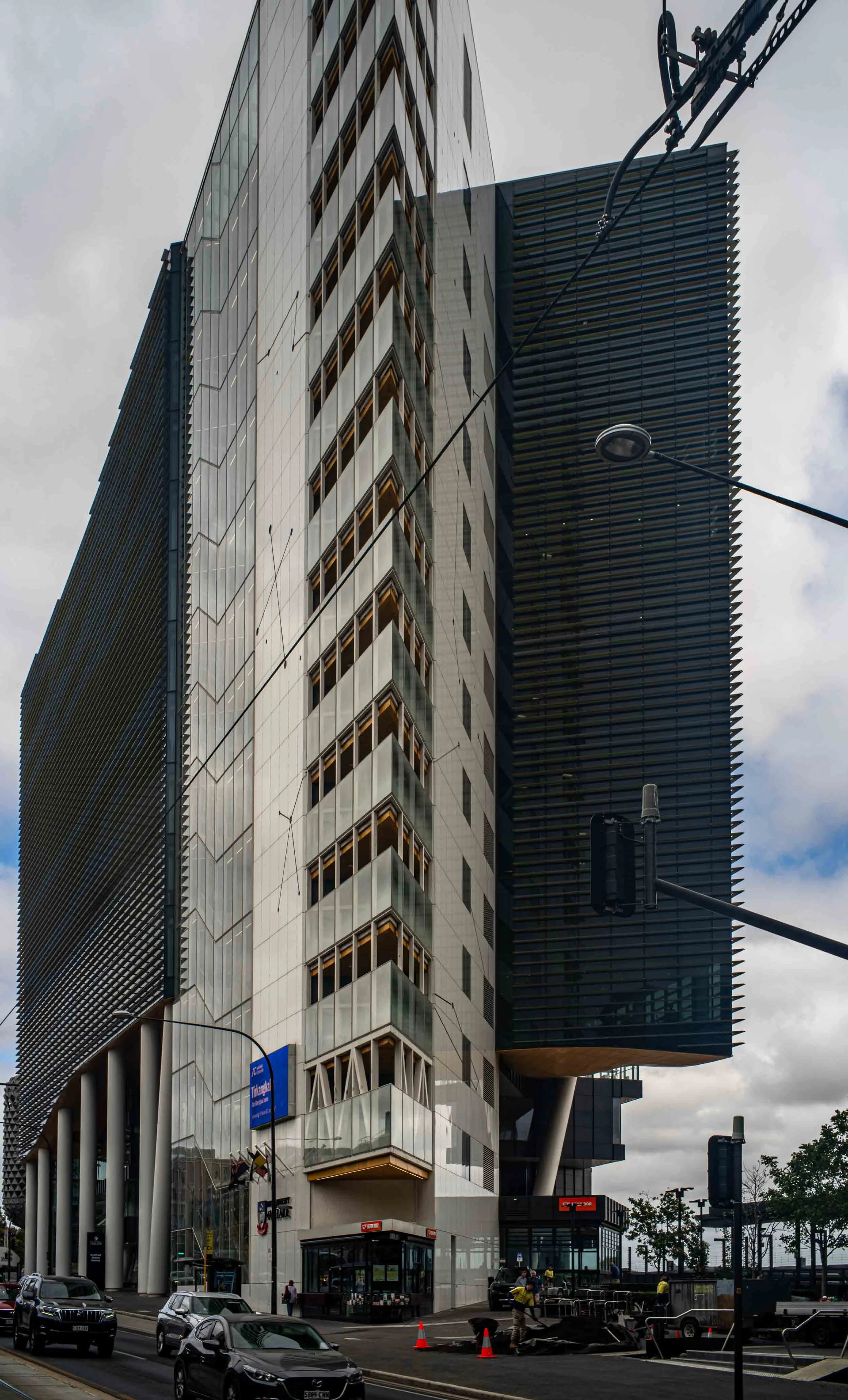
Nth Terrace
I had initially hoped that I could do some photography at the beginning and the end of the day whilst I was working on the cottage. But it was not to be. I kept tradies’ hours (8am-5pm) and would walk Maya before and after work in Adelaide’s eastern parklands so that she could play with other dogs. There just wasn’t any time for the photography.
The last time I actually walked the city as a photographer (using both digital and film cameras) was in November 2025. I’d was to loose interest in exploring the many, empty cafes/shops/bars that I had been previously been focusing on. I was unsure of what to do next with this realist approach to photography, albeit a realism not primarily being a matter of making likenesses of the world but a complex matter of the fitness of the wholly human powers of art in relation to a wholly human, and secular social urban world. Being unsure meant not knowing where I was going.
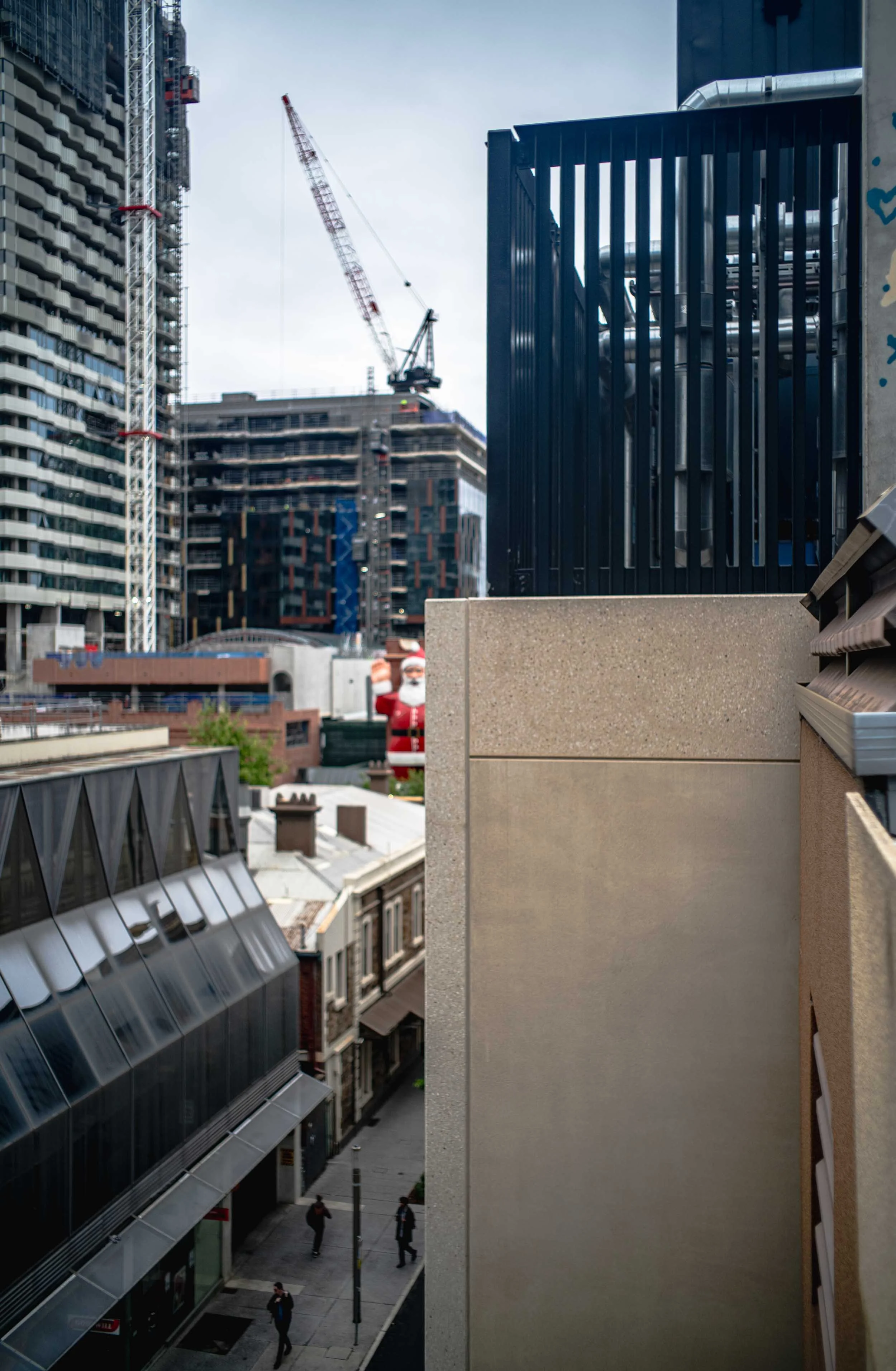
Pitt St, Adelaide Central Market precinct
I was stuck with no strategies to figure out what was going on. This is at a time when I discovered that Adobe Lightroom and Photoshop would no longer worked on my 2014 iMac computer. I needed to upgrade my computer. That got me thinking about the process of digitalization over the last decade.
The benefits of the process of digitalization with the interface of photographic technology with the computer and the availability of large-scale digital printing are pretty clear: they can be seen in the way that it has revolutionized photographic art in the last thirty years as exemplified in the work of Jeff Wall or Andreas Gursky.
Yet digitalization is also erasing the differences between different media since everything (voice and text, sound and image) is being reduced to the surface effects of the digital codes, the numbers, encoding them. It is erasing the very concept of artistic medium as the on-going near-obsolescence of traditional analogue technology continues apace.
In looking back I then wondered what is being lost with the rapid digitalization of our world and the ever increasing use of digital media and AI (ie., Modern Advanced Machine-Learning Models) to create images?
One notable response to this is the use of analogue film and the revival of early photographic techniques, which are seen as timely interventions, even though these may appear as anachronistic. Is what is being lost analogue’s openness to chance, the medium’s indexicality, the focus on the contingent, or its quasi-accidental nature? Or is it something else?